We are excited to welcome Alexandra Mitiku, a Finland-based Korean-Ethiopian artist and poet, to G.A.S. Lagos as our first resident this September. Her works meditate on migration, imperialism, and the imbalance caused by extractive forms of development. Her process is rooted in the Korean cultural concept Han - a non-linear narrative between grief, rage, and hope in the face of injustice. Mythopoetics, painting and installation are ways for her to tell a story that is both deeply personal and inherently universal - like a love song.
During her eight-week residency, Alexandra will develop a series of paintings, elaborating on the thoughts behind her recent works. While deepening her research into hydrofeminism and oceanic thinking, with a particular focus on Édouard Glissant, she is also learning about Nigerian stories and beliefs around bodies of water. She is particularly interested in visiting mangrove ecosystems around Lagos, and exploring how connecting with the environment might give way to gathering materials, like mangrove branches, that could be used in her painting process. Through meditative study and creation, Alexandra hopes to develop her methodologies around image-making. She will also keep a creative journal throughout the residency and looks forward to connecting with the art scene in Lagos.
Alexandra's residency is realised in collaboration with the Finnish Cultural Foundation. To find out more about supporting G.A.S. Foundation, click here.
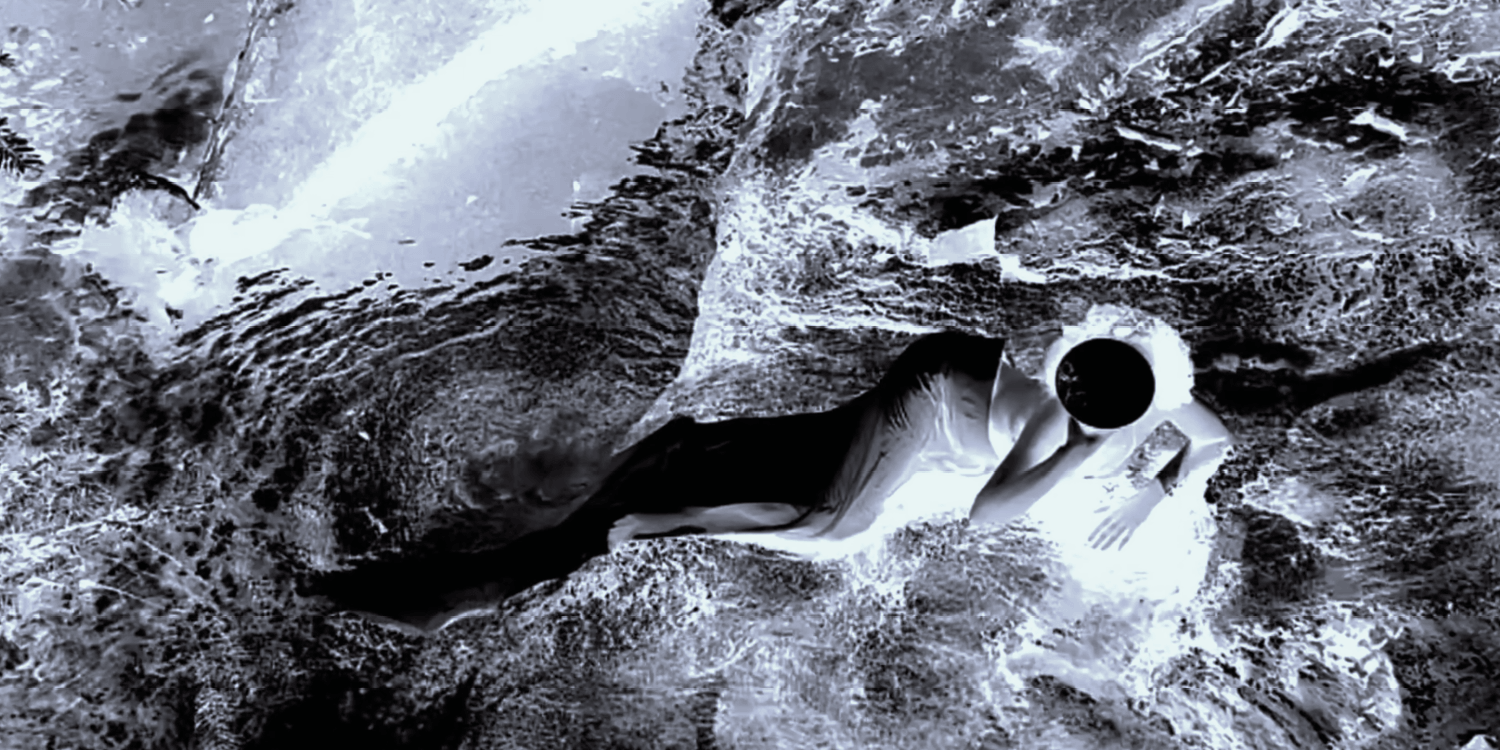 Still from un/real estate, poetry video. Courtesy of the artist.
What is the current focus of your creative practice?
Recently I have been using installation, video and poetry to open sites of aquatic activation, where bodies of water are sensed rather than seen. The river is a recurring symbol, representing the oscillation between separation and connection. Juxtaposing mytho-poetics with construction materials, such as stones collected from construction sites and sand, these works seek out subconscious revolution. Relationality becomes a way to challenge binary thinking and internalized imperialism. Currently in our global context the dominant narratives of the future are centered in extraction rather than reciprocity. As stated by Rev. Angel Kyodo Williams, all domination is situated in one single principle: Those that perceive themselves as having less access to creation, seeking to dominate and extract from those who are perceived to have greater access to creation. This demands disconnection from our bodies, intergenerational memory, earth and time. Through my painting practice, I am reflecting on ways to shift the narratives around world-building. Each painting is rooted in the clay, which is gathered from the landscapes that I have inherited. Binding this with indigo and black pigments of burnt woods, a borderless terrain is shaped by its past, present, and unfolding futures.
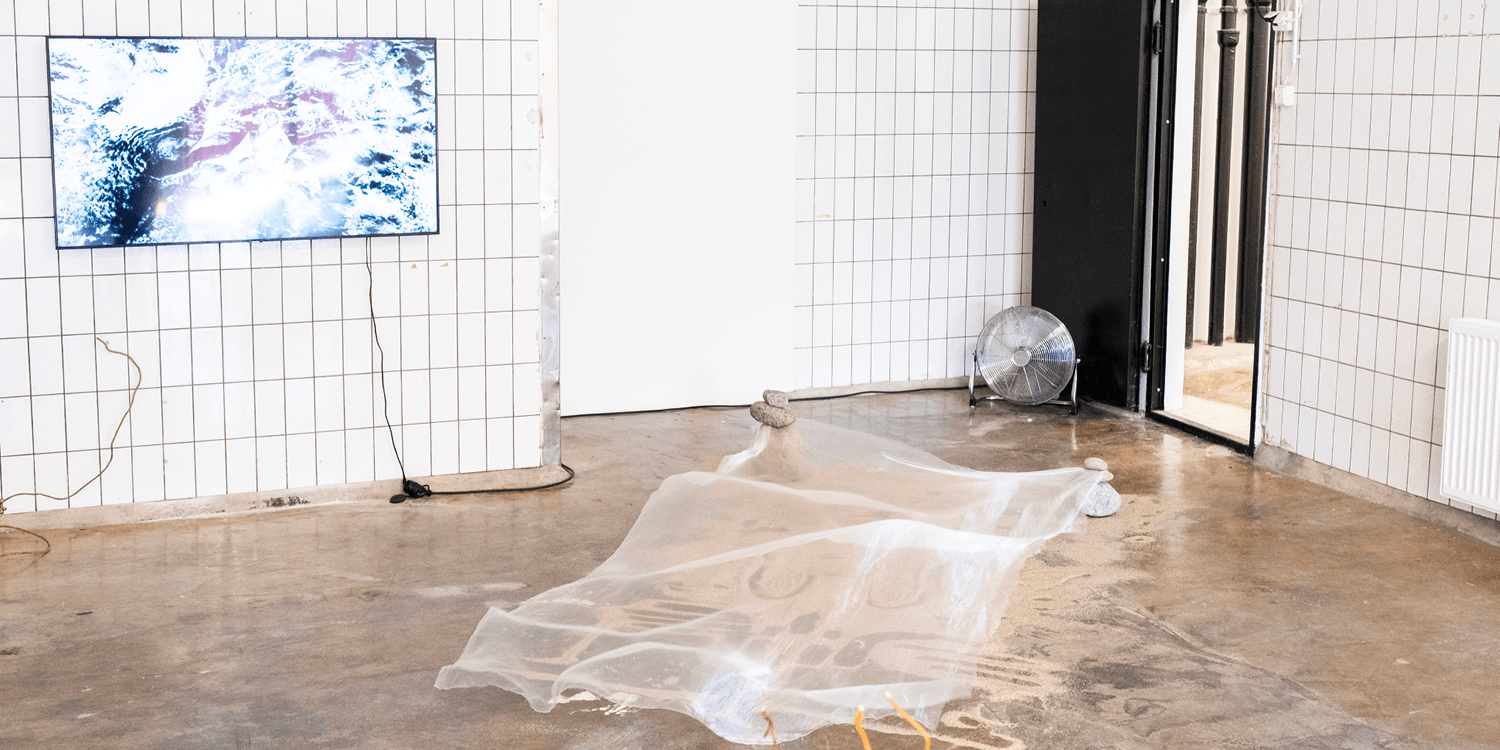 Detail from the installation the stream forks like an oracle tongue. Photo: Oona Oikkonen.
What drew you to apply for this residency and how do you think it will inform your wider practice?
The photo of the reading area first caught my senses. A resonance followed after this when I read how the residency values development, and engagement with local communities, since my own practice is also tied with these elements. I felt that being in dialogue with the people of and around the residency will push my own perspectives in a fruitful manner. I am curious to expand my method of facilitating space and refining my conceptual clarity with the guidance provided at the residency.
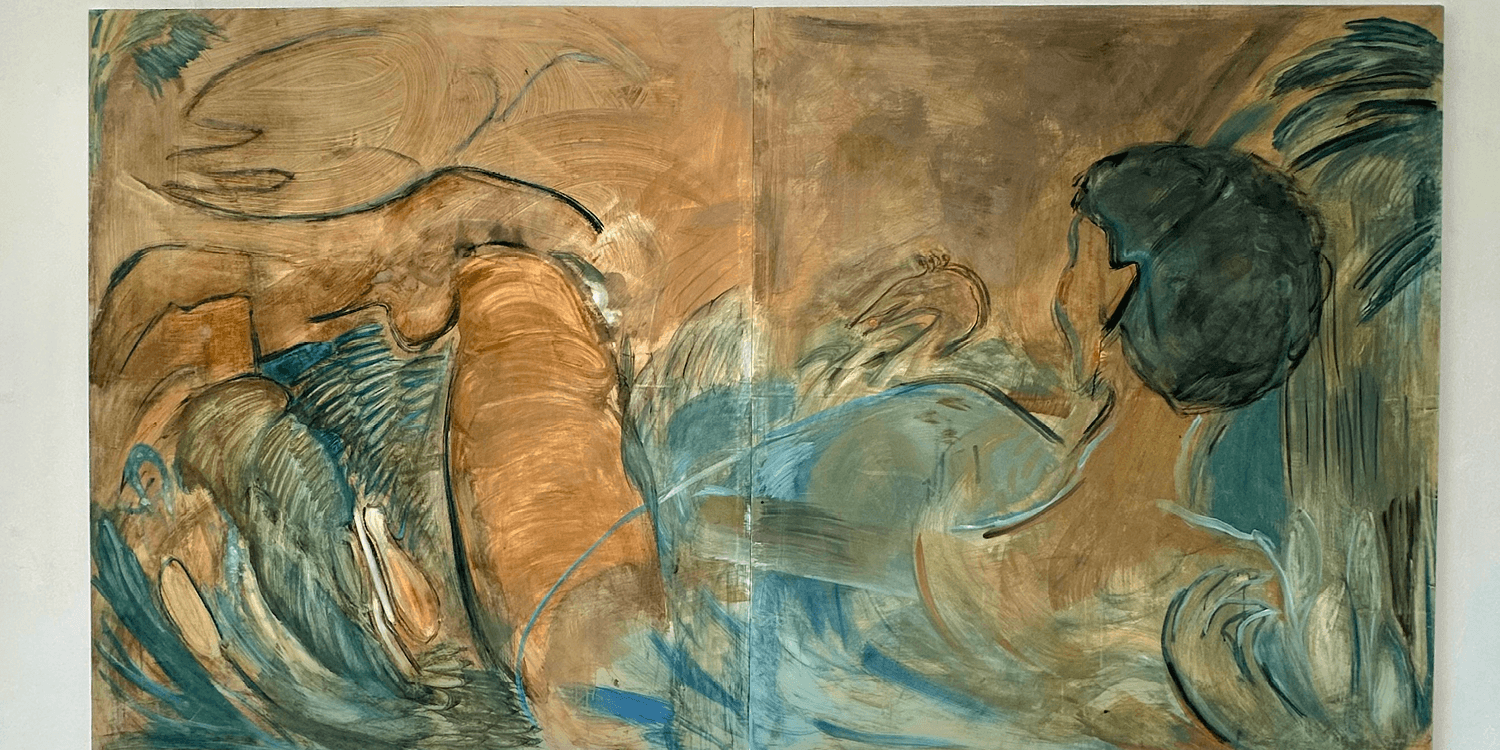 for each fruit picked by the wrong hands, 180x320 cm, 2026. Photo: Studio 11 Gallery.
Can you give us an insight into how you hope to use the opportunity?
I am using the two months to explore the themes that I have been digesting this year through reading, observing, and painting. I am also deepening my conceptual clarity by studying hydro-feminism and oceanic thinking, with a focus on Eduard Glissant. I am especially interested to read more about how the ocean, in Glissant's view, is a space of "chaos-monde," where history and memory are fluid, layered, and constantly in motion. This reading will further my examination of how cycles of creation-destruction are carried out in nature versus through capitalistic intervention. This is why I am drawn to the mangrove tree and its surrounding ecosystem, which is prevalent around Lagos. Mangroves gradually expand the coastline by trapping sediment, while the construction of the Lagos coastal road requires sea dredging and soil placement. The two different methods of land formation give way to two different environmental futures. I hope to connect with people and the environment to learn more about the mangrove tree, and if it is possible to make pigment with it. Beyond learning about the mangrove tree, I hope to be in symbiotic exchange with the people and environment I come across during my stay.
About Alexandra Mitiku
Alexandra Mitiku (b. 1992) is an artist-poet whose practice looks at fantasy and desire as a way to transform oppressive systems; starting with the ones which are internalized. At the heart of her practice lies a river of 한 / Han - a Korean cultural sentiment of deep unresolved grief and rage. This emotional structure is tied to systemic or personal injustice; and the hope for change. It is carried and passed on, evolving through generations. This river becomes a symbolic element in her works; a way of aquatic activation, where metaphysical undercurrents are seen as an influential presence rather than an absence. Her works have been recently acquired by the Museum of Contemporary Art Kiasma (2024) and the Helsinki Art Museum (2026). She is the recipient of a 3 year working grant from Koneen Säätiö (2025-2027).
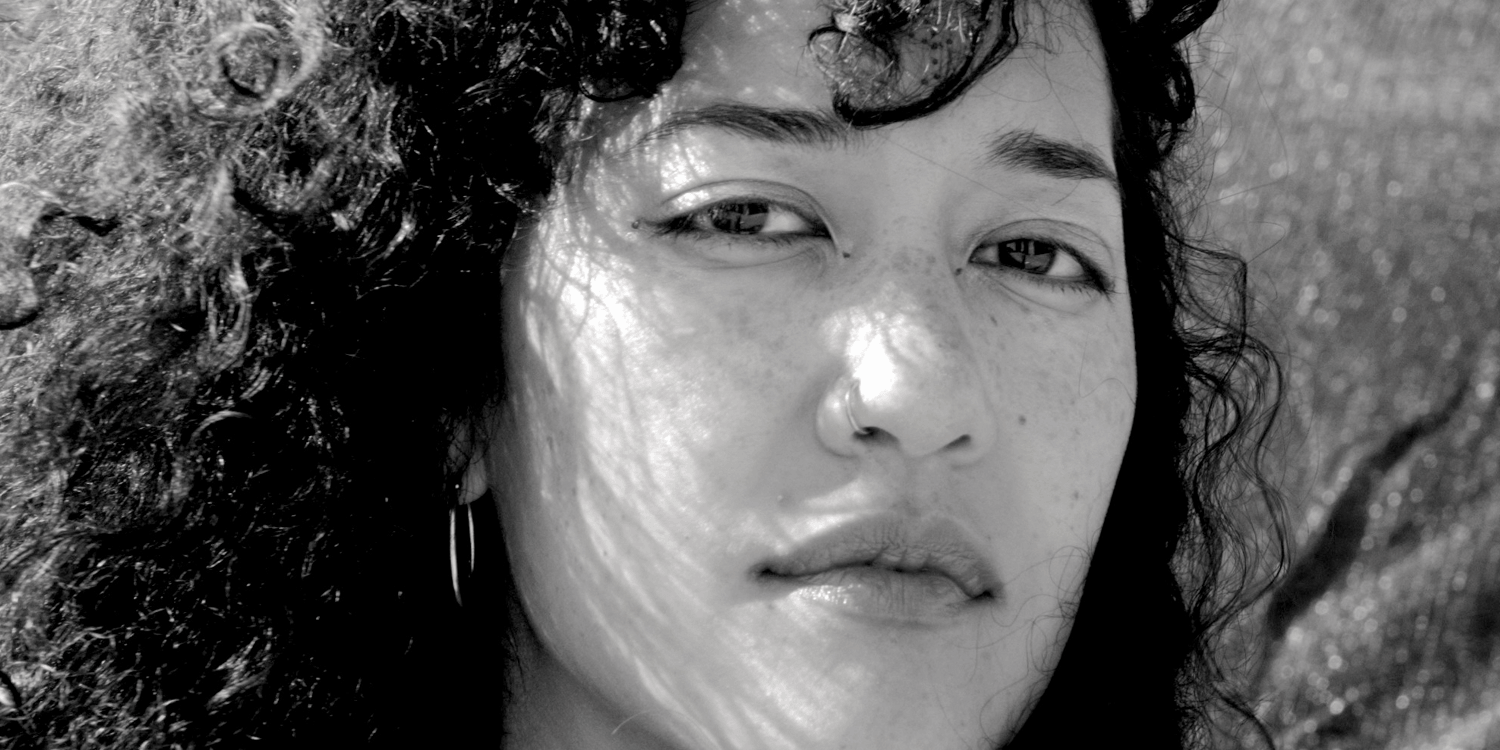 Headshot of Alexandra Mitiku. Photo: Armando Tranquille.
